How our composting processes at Green Box compare to back yard composting?

Founder and CEO of Green Box Compost
When you think about composting, what comes to mind? For a lot of us, it’s a messy pile in the backyard. Maybe a bin tucked into the corner of the garden, or a collection of food scraps waiting to be added? And while backyard composting is a great way to turn everyday organic materials into something useful, there’s a whole lot more happening inside that pile than meets the eye!
At its core, composting is a biological process. We’re creating the right environment for microscopic organisms to break down complex organic materials into simpler, stable compounds that can eventually return nutrients to the soil.
It’s the same basic science whether you’re working with a backyard pile or processing literal tons of food scraps at a commercial facility like ours! The difference comes down to how we manage that environment.
Let’s take a closer look at what’s happening behind the scenes at Green Box, including how our Sun Prairie and Fort Atkinson facilities use two different composting methods to serve our communities.
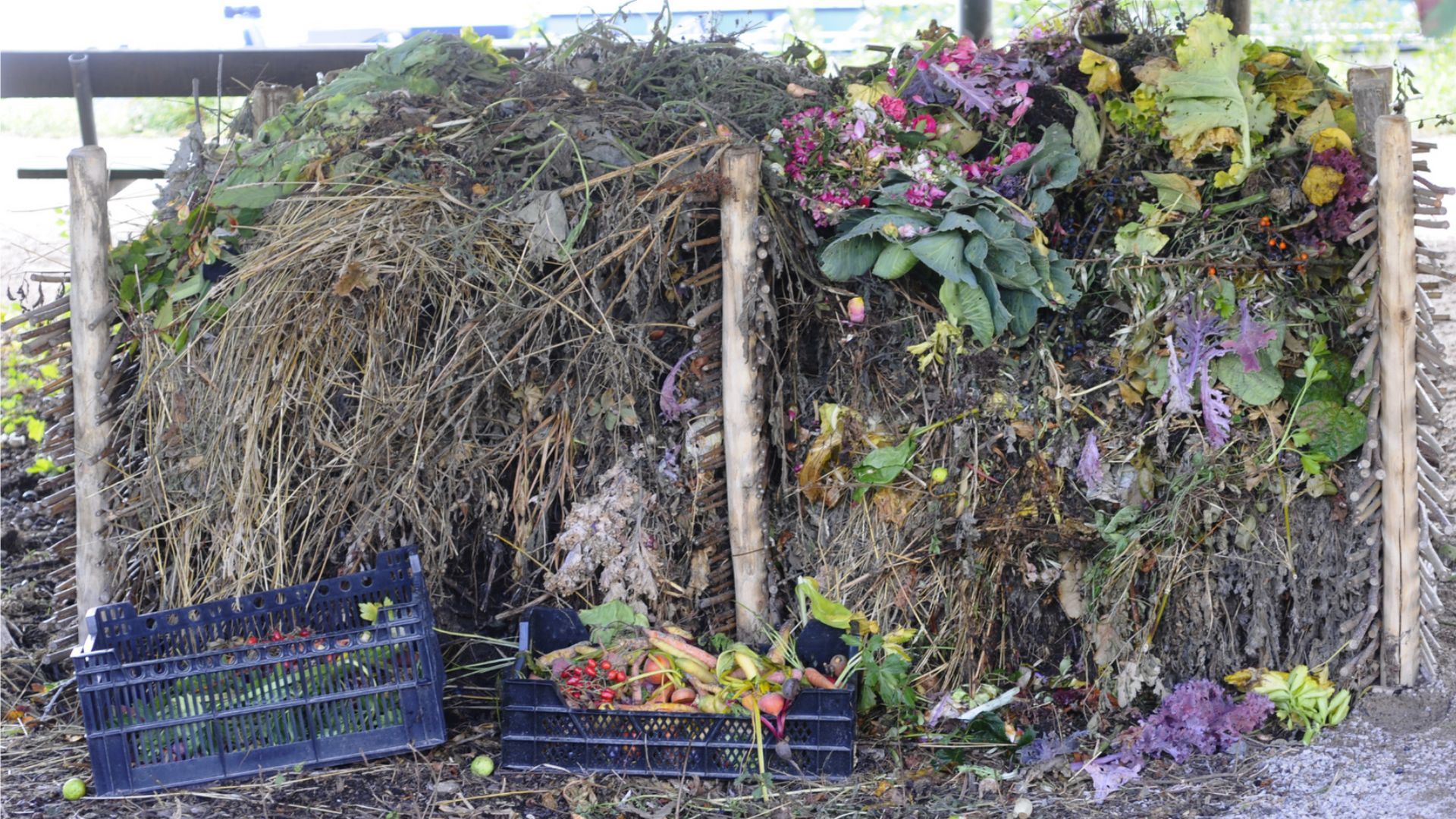
Before we dig into the Green Box process, let’s go back to the basics. Successful composting requires four key ingredients:
Getting the right balance of these ingredients is important! Too much of one thing or too little of another can slow the process down or create unwanted conditions.
So what are browns and greens?
Browns are generally dry, carbon-rich materials. Think:
Greens are generally higher in moisture and nitrogen! These include:
A common backyard composting recommendation is to use roughly two to three parts browns for every one part greens. This is a helpful starting point, although the ideal balance depends on the materials you’re using.
Once you’ve gathered your browns and greens, mix them and add them to your compost pile. Bonus points if you chop larger materials into smaller pieces! Smaller particles provide more surface area for microorganisms to work on and make it easier to mix everything together.
And then the real magic begins!

Composting is bigger than just letting food scraps sit around until they disappear. When you compost, you’re creating a rich habitat for microscopic life. How cool!
Bacteria, fungi, and actinomycetes (specialized bacteria that often look like tiny threads) are major players in the composting process. These microorganisms work together to break down organic materials and turn them into simpler compounds.
As they consume and process organic matter, they respire and release energy as heat. That’s why a healthy compost pile actually gets warm! This heat is a byproduct of all that microbial activity happening inside the pile.
This is also where oxygen becomes especially important. When we’re talking about aerobic composting, we’re talking about decomposition that happens in the presence of oxygen. Microorganisms need that oxygen to support their metabolic processes.
And here’s another cool part: compost piles can actually help regulate their own airflow.
As the center of the pile gets hotter, warm air rises and moves outward through the top. This movement can carry carbon dioxide produced during decomposition out of the pile. Cooler, oxygen-rich air can then enter through the lower portions of the pile. That fresh air helps keep the microorganisms happy and working.
But we also want our materials to be evenly distributed so everything has a chance to break down. And that’s where turning comes in.
Turning a compost pile helps:
In a backyard compost pile, you can usually leave a well-balanced pile alone and let nature do its thing. Turning it occasionally can help speed up the process and create a more consistent finished product.
Depending on the materials, conditions, and how actively you manage your pile, backyard composting can take anywhere from six months to a couple of years. And once everything has broken down into a dark, crumbly, soil-like material, you’ve got finished compost ready to put to work!
Now that we’ve brushed up on the basics, let’s talk about how we apply those same biological principles at a commercial scale!
When Green Box first started, many Madison-area municipalities didn’t allow commercial food scrap composting operations. When we found our warehouse in Sun Prairie, we worked with the city to amend its zoning code to allow us to compost at a commercial scale within city limits.
We had to meet some important conditions: no odors, no pests, and no leachate (the liquid that can drain from decomposing organic materials). Those conditions made sense to us! After all, those are exactly the kinds of things we want to prevent in a well-managed composting operation!
Our solution was an in-vessel composting system.
In-vessel composting is exactly what it sounds like: organic materials are processed inside an enclosed container rather than in an open-air pile. For Green Box, this system has been a great fit for several reasons:
First, it lets us operate indoors, protecting the composting process from the weather. That was especially important when we were getting started with limited equipment and resources.
The enclosed system also helps keep unwanted critters away. Because the materials are contained inside a large rotating drum within our warehouse, we’re not inviting neighborhood scavengers to investigate the latest additions to the compost pile.
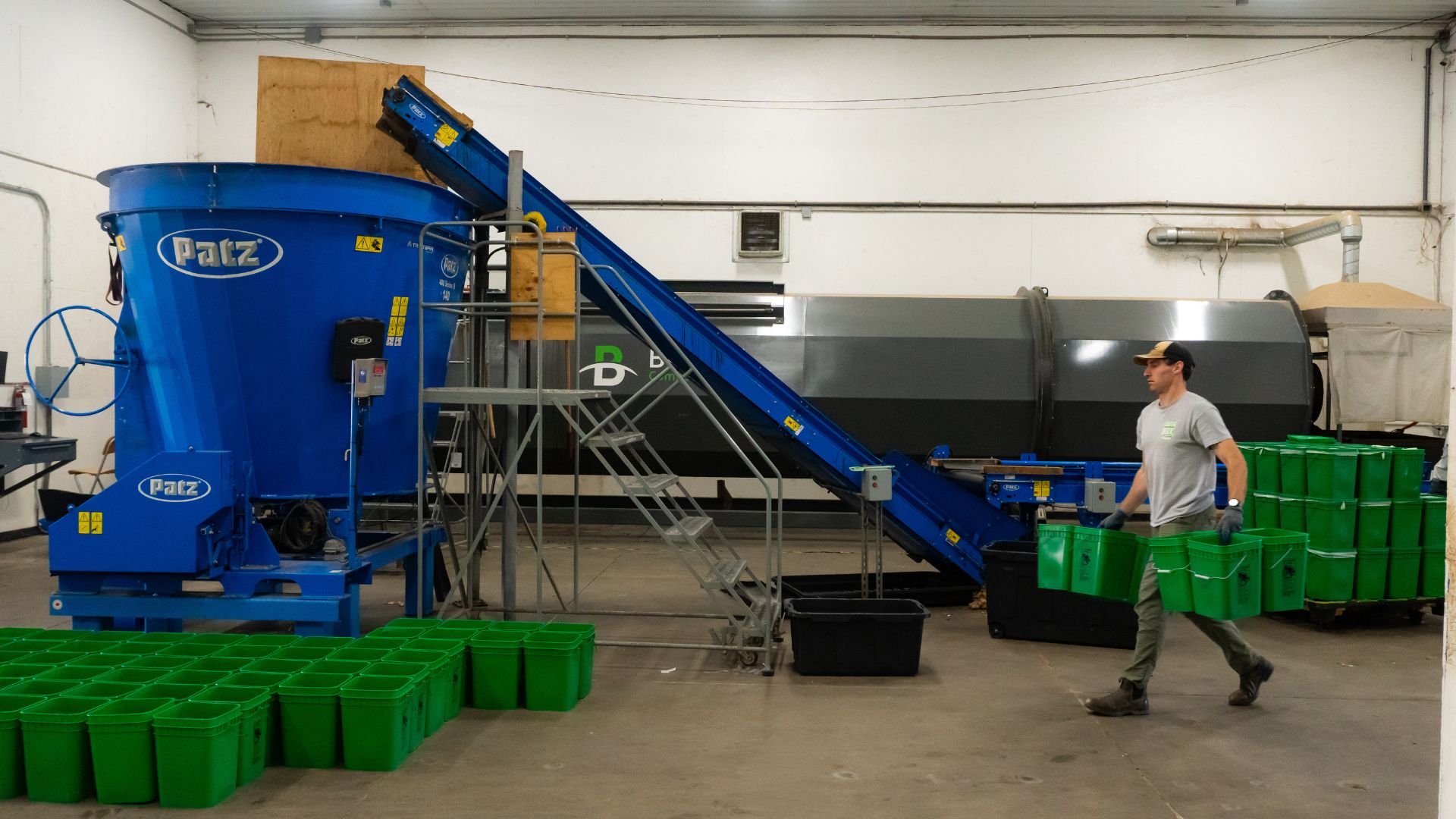
But the biggest advantage is definitely efficiency. Our system combines a mixer, a rotating drum, and a blower that forces air into the composting materials. Together, these components create a controlled environment that supports the microorganisms responsible for decomposition.
Here’s how it all works:
Step #1: Build the foundation.
We start by adding carbon-rich materials to our mixer. This includes things like wood chips, cardboard, sawdust, and paper towels.

Step #2: Add the food scraps.
Next, we add the food scraps collected from our routes that day. We also incorporate approved BPI-certified compostable products, allowing those materials to enter the composting process alongside food scraps.
Step #3: Mix it all together.
We fire up the mixer and blend everything together. This helps distribute the carbon and nitrogen sources, creating a more consistent mixture for the microorganisms to work on.

Step #4: Let the drum do its thing.
The mixed material moves into our rotating drum, where it spends approximately four weeks. Every two hours, the drum rotates to remix the materials and help keep them loose. This creates space for airflow, while a blower forces oxygen into the system to support aerobic decomposition.
As new material enters the front of the drum, older material is pushed out the back. This continuous process lets us keep processing incoming food scraps while moving finished material to the next stage.

Step #5: Give it time to cure.
Once the material leaves the drum, it moves into outdoor curing bunkers. This is an important part of our process! Even though the material has gone through the primary composting phase, it needs additional time to stabilize and mature. We give it about 12 more weeks, with additional turning along the way.
Step #6: Screen and share!
Finally, we screen the finished compost to remove larger materials that haven’t fully broken down. What’s left is a finished product that we can share with our community.
From start to finish, our process takes approximately 16 weeks. One of the biggest benefits of this system is its controlled environment, which lets us accept materials that are harder to compost in an open-air setting, including meat, bones, dairy, and approved compostable products.
That means our members have more opportunities to divert materials from the landfill, all while helping us turn those materials into something beneficial. And honestly? It looks pretty cool, too! Our in-vessel system is a great conversation starter and helps challenge people’s preconceived notions about what commercial composting can look like.
While our Sun Prairie facility is a great fit for controlled indoor composting, we eventually needed another solution to accommodate the growing volume of organic materials we’re collecting.
Enter: Fort Atkinson!
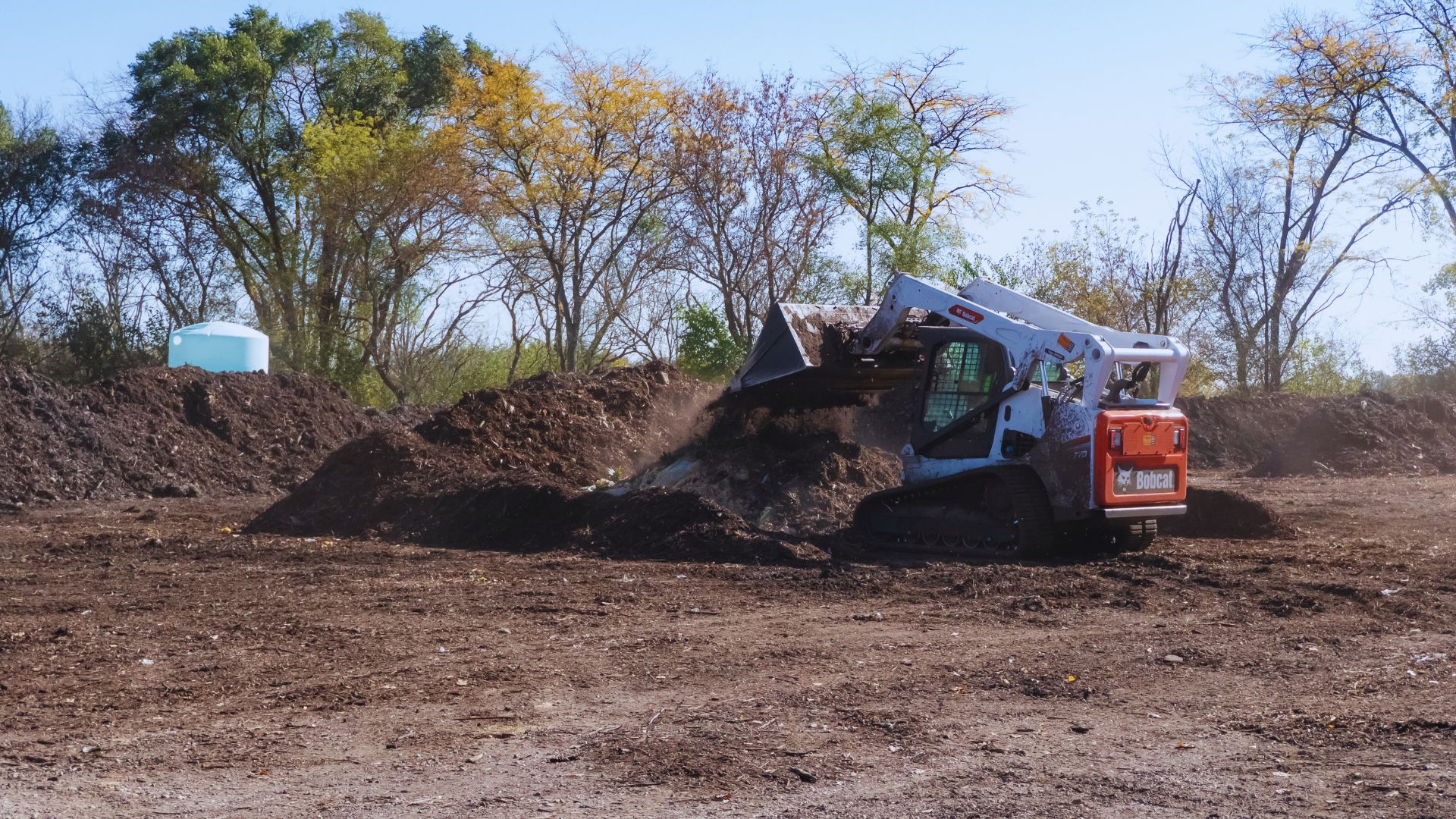
The biggest difference between our two facilities is scale. We collect about five tons of material per day in our large dump truck, along with substantial amounts of yard waste from Fort Atkinson residents. We’re talking roughly 2,000 yards of chipped yard waste and another 1,000 cubic yards of grass and leaves. That’s a LOT of organic material!
Our Sun Prairie facility simply doesn’t have the space or material-handling equipment to accommodate those volumes. So, at our four-acre Fort Atkinson site, we’re using a different approach: windrow composting.
Windrow composting is a more traditional, open-air method that involves organizing organic materials into long rows, or windrows, where they can naturally decompose with some help from regular turning.
Here’s a peek at how we do it:
Step #1: Create a carbon-rich foundation.
We start by creating a pad of wood chips. This gives us a foundation for the incoming materials and helps support airflow and drainage.

Step #2: Add the incoming materials.
We dump the contents of our collection truck onto the wood chip pad, then mix in additional carbon-rich materials to balance the mixture.
Step #3: Let decomposition begin.
After mixing, we set the material aside and give the microorganisms some time to get to work. Within about a week, the material will have already lost a significant amount of its original volume as decomposition gets underway.
Step #4: Build the windrows.
Once initial decomposition has begun, move the material into a windrow. As more material comes in and goes through its initial processing, we start additional windrows to keep everything organized and moving through the process.
Step #5: Turn, aerate, and repeat.
Every week or two, we use our skid steer to turn the windrows. Just like turning a backyard compost pile, this helps redistribute materials, introduce oxygen, and create more space for airflow.
It also helps manage temperature! Remember those hard-working microorganisms we talked about? They’re busy generating heat as they break down organic matter. Sometimes those piles can get a little too hot, so turning helps redistribute that heat and bring temperatures back into a more manageable range.
It’s a more hands-on process than our in-vessel system, but it allows us to process significantly larger volumes of material. By next spring, we expect to produce between 1,000 and 2,000 cubic yards of finished compost at this site!
At first glance, our Sun Prairie and Fort Atkinson facilities might seem like two completely different operations. One uses an enclosed, rotating drum inside a warehouse while the other uses long outdoor windrows on a four-acre site.
But both are built around the same fundamental science: creating the right conditions for microorganisms to break down organic materials and transform them into a valuable resource.
Our Sun Prairie facility gives us a controlled, efficient way to process food scraps and approved compostable products in an urban environment. Our Fort Atkinson site gives us the space and equipment to handle much larger volumes of incoming organic materials, including food scraps and community yard waste.
Together, these facilities let us expand what we can collect, process, and return to the communities we serve!