

How our agreement with Fort Atkinson works, how we set it up, our processing capabilities, and the future of composting in WI

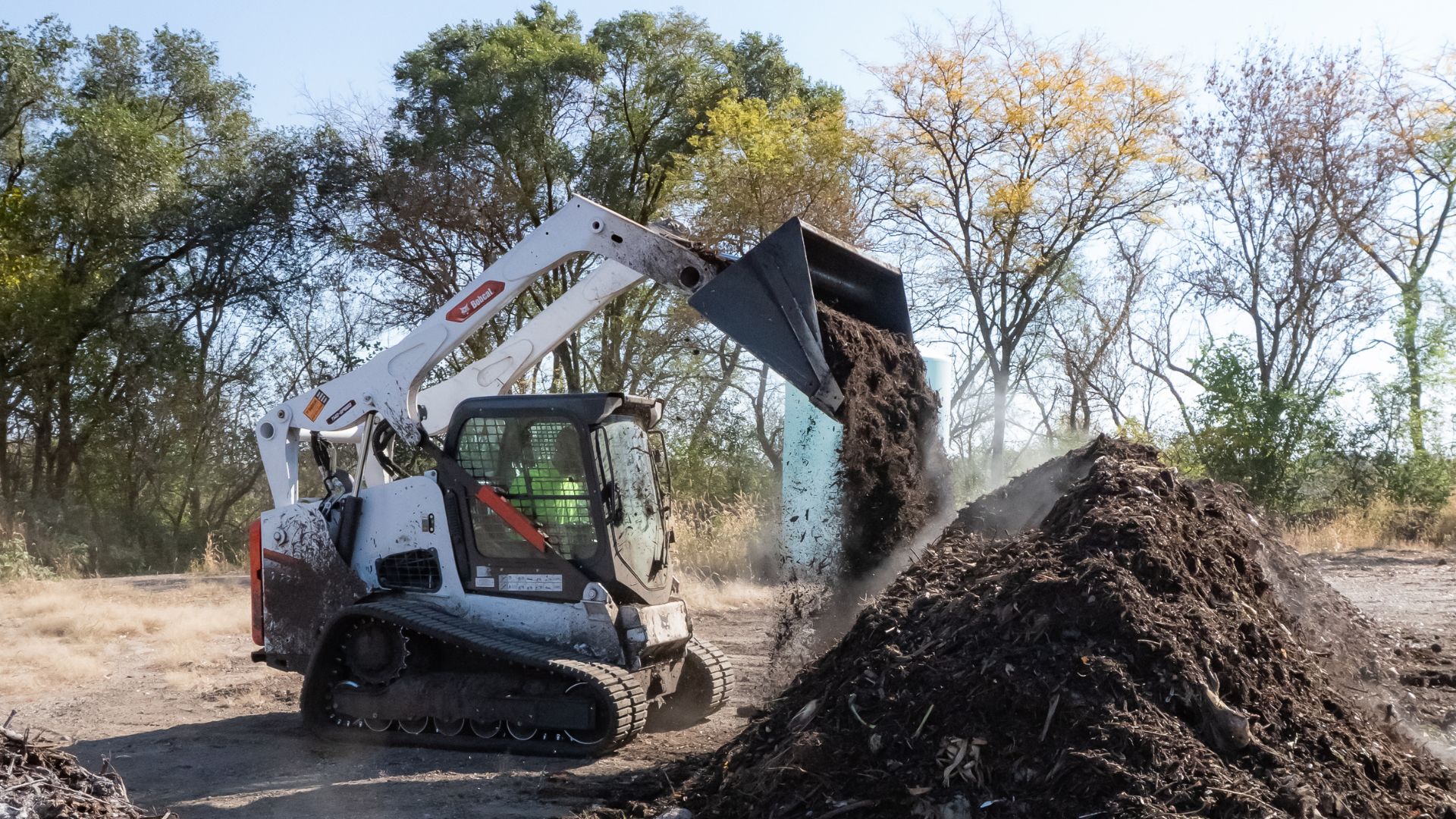
Growing Green Box has always been about one thing: keeping food scraps out of the landfill and turning them into something useful instead.
We’ve been lucky enough to expand in several ways this year, making it possible for more people to compost and making the process more reliable, accessible, and impactful.
Our newest composting site is a big step in the right direction:
Starting in late 2024, our founder Ben spent about a year and a half working with Fort Atkinson’s Department of Public Works. Together, we explored the possibility of a partnership and what it might look like.
Eventually, everyone agreed it was time to join forces! In exchange for composting Fort Atkinson residents’ yard waste and excess wood chips, we would gain access to two-thirds of their current compost site, about 4 acres, to compost our food scrap collections.
This felt like such a win-win! We really needed a new compost site we could grow into, and we also needed the carbon in their wood chips and yard waste to balance the nitrogen in the food scraps we collect. At the same time, the city of Fort Atkinson can reallocate resources to more pressing matters, allowing us to compost more effectively for them and bring food scraps to a site that otherwise wouldn’t be permitted. They also get a few hundred yards of finished compost back each spring. Talk about teamwork!
With this set-up, we hope to be able to bring over 2,000 yards of food scraps - about 4 million pounds - to the site each year (and double that in wood chips!), creating about 3,000 yards of compost. We aren’t there quite yet, but we will be before we know it, and we’re proud to be proactive.
We also hope this partnership serves as a model for other collaborative projects with municipalities that want to offload their cumbersome yard-waste compost sites and bring food scraps to those same sites, meeting the need for landfill diversion.
Before this new site, we hauled roughly 80% of the material we collected to composting sites we didn’t operate. In other words, we were outsourcing.
Working with other composting facilities helped us grow and let us serve our community by acting as a middleman between neighbors and large composting operations. At the same time, the process also came with some limitations.
For example, we couldn’t always guarantee the quality of the composting process. And we couldn’t be certain that those sites would be available to us long-term. We were craving something that felt reliable and more like “ours.”
Another tricky challenge was that many of those facilities didn’t accept compostable disposable items (like compostable silverware or food scrap bags). But this is an important part of our process, so this limitation felt restrictive. If we’re asking people to make the effort to separate their food scraps and compostable materials from the rest of their waste, we want to be able to give those materials a real place to go. We’d hate for a compostable item to make it all the way through someone’s kitchen, into their Green Box, and then ultimately end up somewhere it can’t actually be composted.
With our new Fort Atkin site, we have so much more control over that process. We can compost these materials ourselves, maintain the quality of the finished product, and be confident we can do so for years to come, giving us plenty of room to grow.
The Wisconsin Department of Natural Resources has set a goal of diverting 50% of food scraps from landfills by 2030. We were thrilled to learn about this ambitious plan, but reaching it will take more than individual households joining the composting party. As a state, we’ll need the infrastructure to support all those scraps once they’re collected.
One important part of this goal is converting existing yard-waste composting sites so they can accept and process food scraps, too. This isn’t as simple as adding a sign that says “Food Scraps Welcome.” Why? Because food scraps require different handling and a different DNR permit. And great news – our new site has been set up specifically to meet those requirements, so we’d like to think we’re ahead of the curve.
We’re not only creating more capacity for Green Box, though! We’re also helping build the kind of composting infrastructure our communities will need to make serious progress toward keeping food scraps out of landfills.
And then, of course, there’s the compost itself. In the past, because we processed so much of our collected material elsewhere, we might have had around 100 cubic yards of finished compost available to sell in a year. And years ago, this felt like a huge feat!
But with our new site, this number is about to change. Next spring, we’re expecting to have around 1,000 cubic yards of compost available to share with our communities. The spring after that? We’re projecting closer to 3,000 cubic yards.
That’s a whole lot of food scraps becoming a whole lot of good, rich compost (instead of taking up space in the landfill). And we’re so excited about what this means for Wisconsin! More locally produced compost means more opportunities for homeowners, gardeners, landscapers, schools, community gardens, and other organizations to put it back into the soil.
We’re especially excited to give back to the community through organizations that support hands-on learning for little ones, grow food for neighbors, and build healthier soil for all.
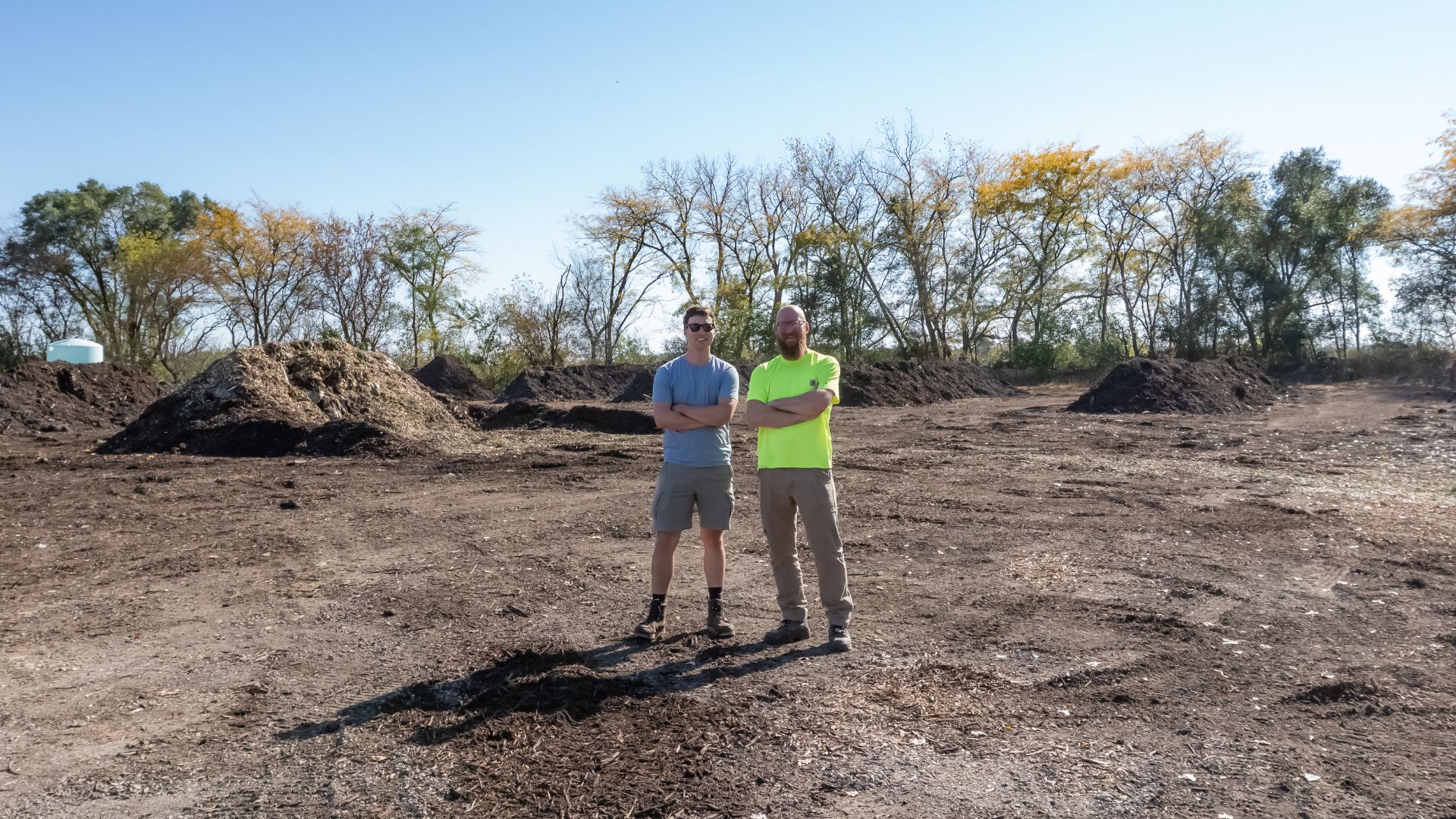
From the beginning, we’ve been blown away by the support we’ve received from communities in and around Dane County. Expanding into new counties and communities across the state isn’t something we’re doing just for the heck of it. We’re doing it to create infrastructure to do this work well.
Green Box is all about knowing that the food scraps we collect have a reliable place to go. It’s about being able to accept more of the materials our customers want to compost. It’s about producing more finished compost locally. And it’s about building a foundation that lets Green Box keep serving more people without compromising what matters to us.
Wisconsin has a big food-waste diversion goal ahead of us, and we can’t accomplish it alone! But every new composting site, every food scrap that stays out of the landfill, and every cubic yard of finished compost that makes its way back into our communities moves us a little closer to success.
We’re excited to keep growing, and even more excited about what this growth can make possible!
.png)